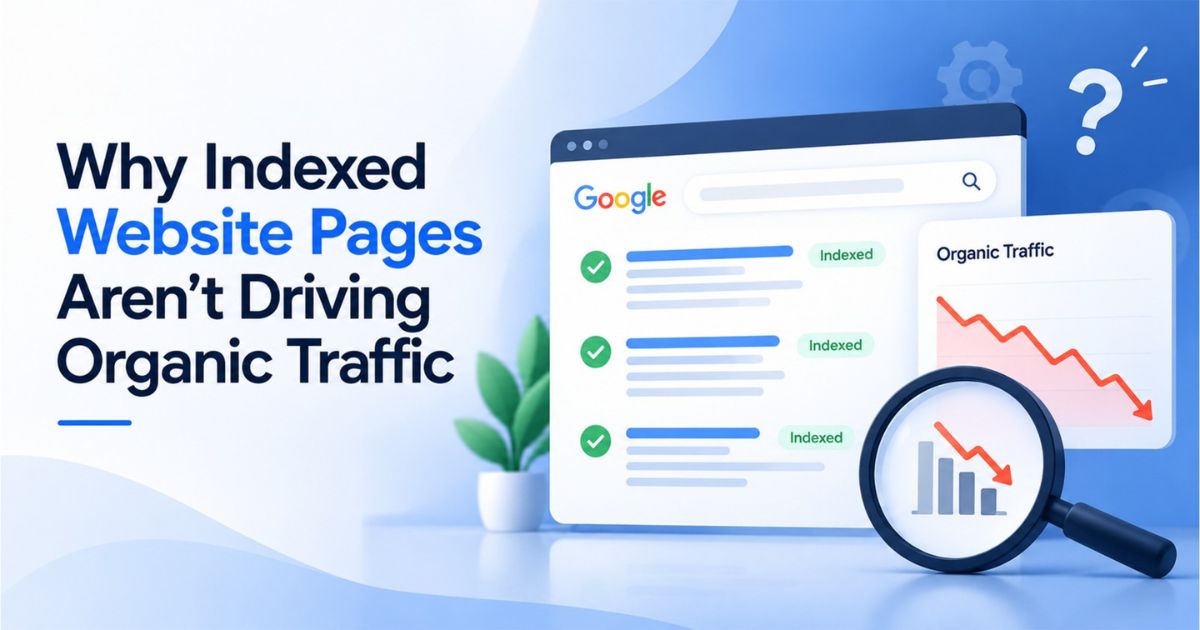
Your pages are on Google, but what’s stopping people from clicking on them? You have worked on your keywords, published helpful content, and made your pages accessible to search engines. Still, the traffic may be lower than you expected. Getting your pages indexed is only the first step in SEO. Google may include your content in search results, but that does not guarantee high rankings or more visitors. Understanding why your pages aren’t attracting clicks can help you find what needs improvement and bring more organic traffic to your website.
Your Indexed Pages Are Still Ranking Low
A page can be indexed by Google without appearing at the top of search results. Competitors' pages might get more attention if they provide more helpful information or better fit what users are looking for.
How to improve your rankings:
Answer questions your target audience actually asks.
Add useful information that makes your content more valuable than competing pages.
Include relevant keywords naturally in headings, titles, and content.
Update outdated information regularly.
Build relevant backlinks from trustworthy websites.
Examine competing pages to see what themes your content is missing.
Your content does not match search intent
Imagine someone searching for a service provider. If your page only explains general information about the service, it may fail to meet that person's needs.
Check whether your content:
Answers the main question behind the search.
Provides the type of information users expect.
Matches the purpose of the keyword you are targeting.
Offers practical advice instead of unnecessary information.
Includes clear next steps for readers who need your product or service.
Review the top Google results for your target keywords to understand what your audience wants to see.
Technical Issues Are Affecting Your Visibility
Certain Google indexing issues may signal technical flaws that limit search engines' ability to access and understand your website.
Look for these common problems:
Important pages are hard to find due to broken internal links.
Incorrect canonical tags lead Google to a different URL.
Pages that load slowly make for a bad user experience.
Issues with mobile usability that make browsing challenging.
Unintentional noindex directives that stop sites from showing up in search results.
Examine indexing reports, examine specific URLs, and find technical problems with Google Search Console.
Your Pages Are Missing Strong Internal Links
Pages with few internal links are harder to find. Linking related pages helps visitors explore your website and search engines understand its structure. Improve your internal linking by:
Linking related blog posts to relevant service pages.
Connecting supporting articles to broader guides.
Using descriptive anchor text that explains the linked page.
Adding links to important pages from relevant, frequently visited pages.
Looking for helpful pages with few or no internal links.
Your Titles Are Not Encouraging Clicks
A page may appear in search results but receive few visits because its title and description fail to capture attention. Make your search listings more appealing:
Write clear, relevant title tags.
Include your primary keyword naturally.
Explain the value readers will get from the page.
Keep titles specific rather than vague.
Write helpful meta descriptions that accurately reflect the content.
How Can You Find the Real Problem?
Getting more organic traffic takes the right SEO strategy, useful content, and regular website improvements. You can boost your search rankings and make smarter judgments by knowing why your pages aren't receiving clicks. Make sure your website is user-friendly and provides visitors with the information they require. Partner with Mighty Warners Technology to increase your search engine visibility, attract your target audience, and build a stronger online presence for long-term business growth.
We use cookies to improve your experience on our website, analyze traffic, and personalize content.
By clicking Accept, you agree to our use of cookies.