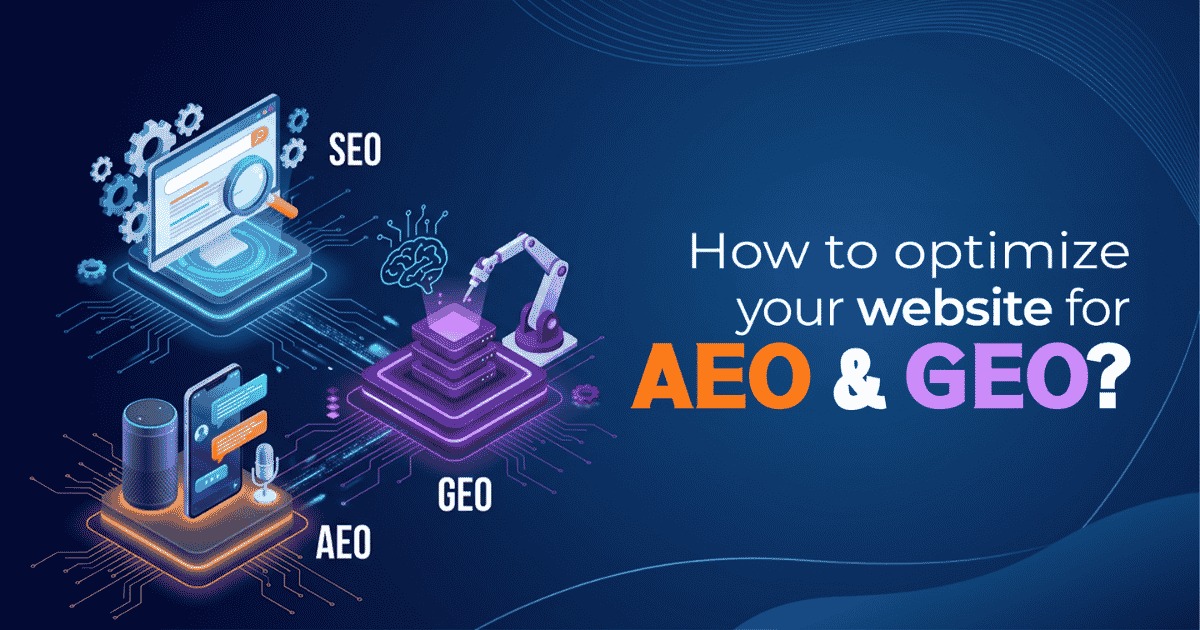
SEO is not just about the keywords and backlinks like it used to be. In the era of Artificial Intelligence (AI), there are two strategies for how your websites are found. One is Answer Engine Optimisation (AEO), and the other is Generative Engine Optimisation (GEO). Knowing both and how to do so is the key to appearing in AI-powered search results or being ignored altogether.
AEO vs GEO: What They Mean
Below is the table that shows what AEO and GEO are in general:
|
AEO (Answer Engine Optimization)
|
GEO (Generative Engine Optimisation)
|
| Formulates content that is picked up as the immediate answer, such as in Google's AI Overviews, Siri, and Alexa. |
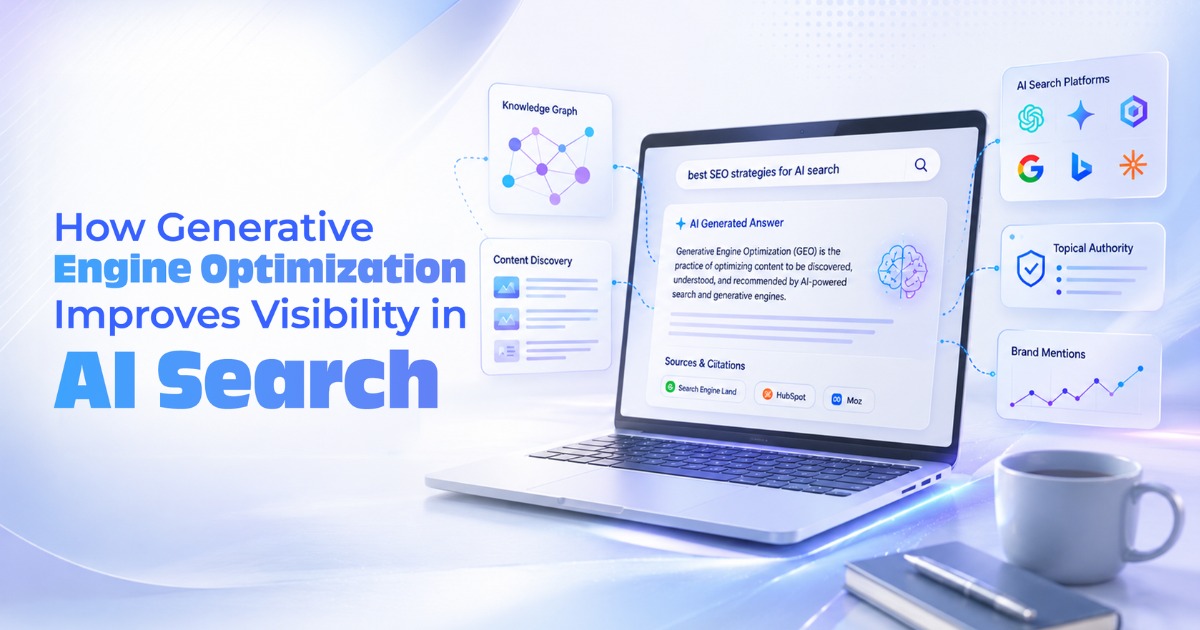
Optimizes content for citation and reference by generative AI tools, such as ChatGPT, Perplexity and Gemini. |
| Focus: structured content with questions that AI can extract from them fast. |
Focus: authoritative content which is trusted as a source by AI models. |
Why AEO & GEO Are Important Now?
A staggering 60% of Google searches are now performed without using a click. It is because users find the answer to their question directly in the AI Overview. Even if you rank, without optimizing your content for AI search, your traffic goes down.
How Can We Optimize the Website for AEO and GEO?
- Create structures to enable content: Create clear, question-and-answer formats for your inquiries and responses. An H2 or H3 can be a query that your target audience is genuinely interested in. AI systems will extract responses paragraph by paragraph, making sure each response is unique and individual.
- Add schema markup: Use of FAQ, How to and Article schema. Structured Data is a key component of Technical SEO for AI search; it helps AI engines understand the content of your page and how to categorise it.
- Create authoritative and cited content: GEO will provide a reward for citations of credible sources. Link to research, statistics, and expert commentary. AI models are much more likely to mention content that shows trustworthiness and expertise.
- Create website content that is optimized for AI: Avoid jargon-heavy prose. Avoid using technical jargon, lengthy sentences, and indirect answers. Content for AI search needs to be readable to both people and machine-learning models.
- Optimize for voice-based queries: Include long tail & question keywords such as "what is", "how to", and "best way to". They are the same as the way that users use AI tools or voice assistants.
- Optimize page speed and crawlability: Technical SEO for Ai search remains relevant. AI crawlers prefer clean HTML pages that load quickly and are optimized for mobile devices. Optimize images, repair broken links, and regularly submit new sitemaps.
AEO & GEO Checklist For Website Optimization
- Include FAQs on each important service or blog post page.
- Utilise H2/H3 headings in the form of natural questions.
- Use the FAQ and HowTo schema on appropriate pages
- Use at least 2–3 credible, outside sources per article
- Include an author bio at the end of each blog post that includes credentials.
- Summarise, in a short 40-60-word summary, the content of each page at the top of that page.
- Make your website mobile-friendly and load in seconds.
- Optimize your Google Business Profile for local GEO signals and claim it
Get Ahead of the Competition by Starting to Optimize for AI Search Today
AEO and GEO are not trends of the future, but it is what is required today for improving search visibility. In 2026 and beyond, the websites that will get the most visibility are the ones people and AI can actually trust. The sites with genuinely useful, in-depth content that is easy for AI tools to read. Success won't come from tricking search engines, but from creating content that naturally gets recommended and cited.
The change is already in place. The only thing that matters is that your website is prepared for it. Let's prioritise AEO & GEO and make the website rank in the AI search results.